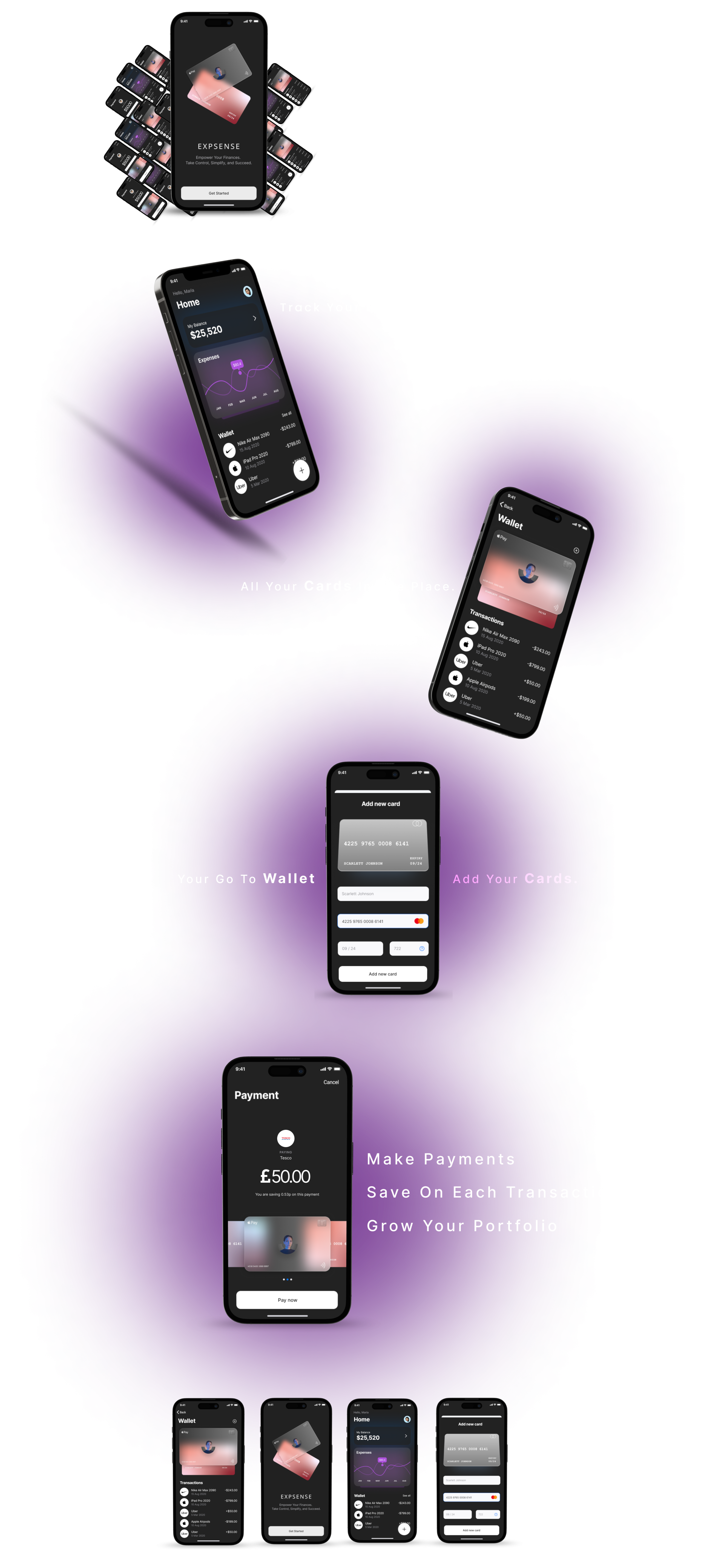
Product Overview
ExpSense is a micro-investment platform designed to simplify investing for beginner investors. By rounding up everyday purchases to the nearest dollar and investing the difference into diversified portfolios, the platform helps users start investing with minimal capital and effort. This case study details my role as Product Owner in the creation and launch of this fintech product.
My Role as Product Owner
As the Product Owner, I was responsible for the end-to-end development of ExpSense, overseeing all stages from ideation to launch. I worked closely with cross-functional teams, including design, development, marketing, and stakeholders, to deliver a product that met both user and business needs.
Key responsibilities included:
- Defining the product vision and roadmap
- Managing the backlog and ensuring smooth sprint execution
- Collaborating with stakeholders and ensuring alignment with business goals
- Conducting market and user research to validate assumptions
- Prioritizing features and ensuring successful release management
Key Skills Demonstrated
In this project, I applied a comprehensive set of skills required for a Product Owner, which are crucial for the successful delivery of a fintech product. The following are the core competencies I demonstrated:
1. Vision & Roadmap Development
I developed the product’s vision, ensuring it aligned with both market trends and business goals. The roadmap balanced long-term vision with short-term deliverables, including key features like automated round-ups and user education resources. The roadmap was continuously adjusted based on market research and user feedback.
2. Stakeholder Management
I maintained clear and constant communication with internal and external stakeholders. By organizing regular meetings, I ensured transparency, managed expectations, and garnered input throughout the development process. This was essential for keeping the project aligned with business objectives and ensuring smooth collaboration.
3. Market & User Research
I led efforts in conducting comprehensive market analysis and user research to better understand our target audience. Key insights led to defining the core features and addressing user pain points, such as providing low-barrier entry to investing and ensuring transparency in fees.
4. Backlog Management & Release Management
I prioritized features using the MoSCoW method, ensuring that the most valuable features were developed first. The initial MVP focused on essential features, like round-ups and simple portfolio management, with future releases planned for expanded functionalities.
5. Agile Methodology
We followed Agile principles throughout the development process, using tools like Jira for sprint management. Regular ceremonies, such as sprint planning, stand-ups, and retrospectives, helped us stay on track and continuously improve.
6. Cross-Functional Collaboration
Collaboration with UX/UI designers, developers, and marketers ensured the product was both functional and user-friendly. This synergy across teams was key to the success of RoundUp Wealth.
7. Risk Management & Quality Assurance
I identified potential risks, such as market competition and technical debt, and proactively managed them. I also worked with the QA team to create a robust testing strategy, ensuring a high-quality product and a smooth user experience.
8. Leadership & Ownership
I took full ownership of the product, guiding the team from ideation through development to release. I motivated the team and ensured we stayed aligned with the product vision, while making strategic decisions to steer the product in the right direction.
Development Process
Step 1: Defining the Product Vision
The first step was to define the product vision: to create a user-friendly, automated investment platform that made it easy for users to save and invest in a diversified portfolio. The vision was developed based on research into user needs and market trends, and it served as a guiding light throughout the development process.
Step 2: Stakeholder Engagement
I coordinated with key stakeholders—including finance teams, compliance officers, and development teams—to align on the product’s features, scope, and regulatory requirements. This ensured that all relevant parties were involved early on and had their needs addressed throughout the process.
Step 3: Conducting Research
I initiated user interviews, surveys, and market research to understand the pain points of potential users, such as lack of financial literacy and hesitations around investing. Insights from this research informed the product’s design and feature prioritization, with a strong focus on transparency, low fees, and educational content.
Step 4: Backlog Prioritization
Working closely with the development team, we created a backlog of user stories and prioritized features using the MoSCoW method. The initial release focused on essential features: automated round-up of purchases and a simple portfolio management system.
Step 5: Designing the User Experience
I worked alongside the UX/UI team to design a simple, intuitive interface. The goal was to ensure that even beginner investors could easily navigate the app. We iterated on wireframes and prototypes to ensure a smooth user journey, from onboarding to investment tracking.
Step 6: Agile Development & Sprint Management
The product was developed using Agile methodology, with two-week sprints and regular sprint reviews. I facilitated sprint planning and retrospectives, and actively participated in daily stand-ups to ensure that the team was aligned and progressing toward the defined goals.
Step 7: Testing & Quality Assurance
I coordinated with the QA team to test every feature rigorously. We ran beta tests with real users, gathered feedback, and refined the product. This allowed us to ensure that the product not only met the technical requirements but also provided a seamless user experience.
Step 8: Launch & Post-Launch Activities
The product was launched with an initial MVP. After launch, I worked closely with the marketing team to ensure successful user acquisition and communicated with customers to gather feedback for future iterations. I also monitored key performance indicators (KPIs) to assess product performance.
Conclusion
The development of ExpSense was a rewarding journey where I applied my expertise as a Product Owner in fintech to successfully build a product that both solved user pain points and aligned with business objectives. This project not only honed my skills in stakeholder management, backlog management, and agile methodologies, but also deepened my understanding of the fintech industry and its users.
Through ExpSense, I demonstrated my ability to lead cross-functional teams, prioritize effectively, and create a product that delivered significant value to users and the business. This case study is a testament to my ability to transition into the fintech sector and successfully manage the development of innovative fintech products.